
 Image 1 of 2
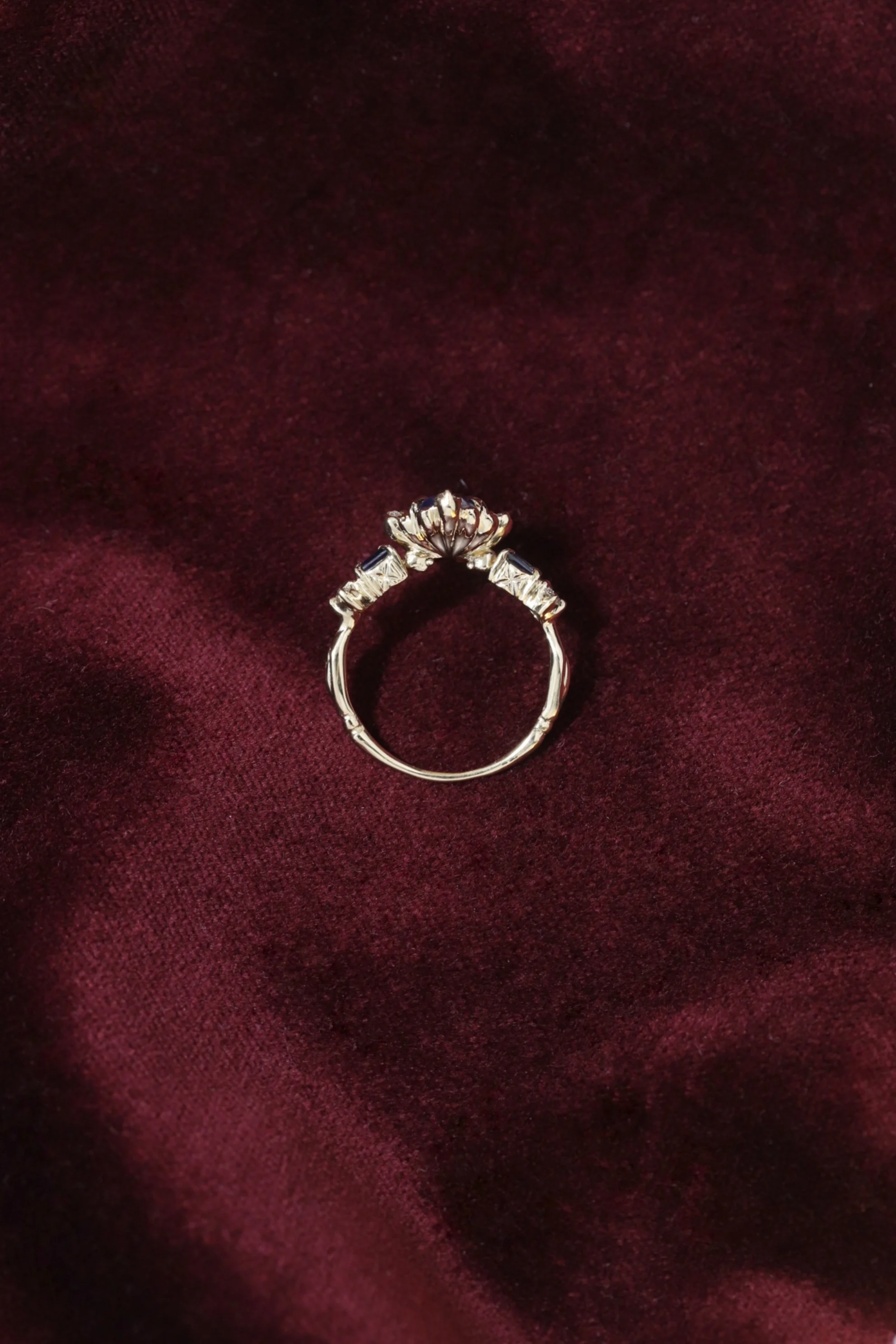 Image 2 of 2
-
Prologue
Two households both alike in dignity,
In fair Verona, where we lay our scene,
From ancient grudge break to new mutiny,
Where civil blood makes civil hands unclean,
From forth the fatal loins of these two foes
A pari of star-crossed lovers take their life,
Whose misadventured piteous overthrows
-
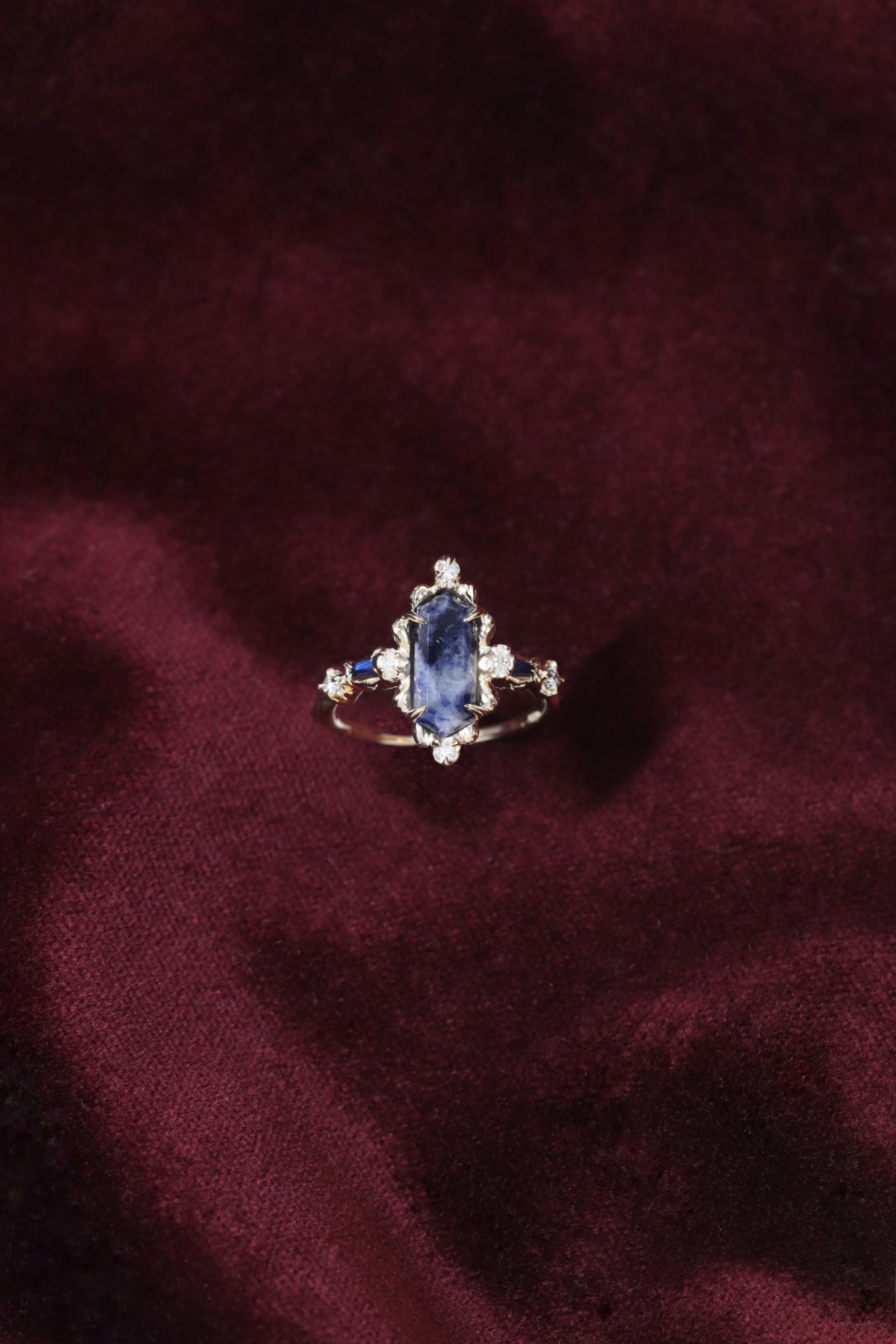
Blue sapphire, cut to read like an oil painting of the sky and set the way a painting sits inside its frame. Made to be viewed the way a painting is on a wall, or a play from the dark.
The sky is built of moving parts, and so is the setting: it shifts the way the sky shifts across the five days of their love, bringing the base into view as it moves- an armour shield carved beneath the stone. With the centre setting sitting large, that same shift also lets the ring rest easy on the hand.
-
The sapphire is the sky, and in Romeo and Juliet the sky is time itself. The torchlit night where they meet, the dark of the balcony, the false dawn that parts them, the permanent night of the tomb, The gemstone holds all of those skies at once, its depth shifting with the light the way the sky shifts across the five days of their love.
The sky is never only a background. For an Elizabethan audience the stars were the mechanism of fate. To be star-crossed was not a figure of speech but a fact, the fate has arranged against them. The stone is that sky, the destiny that both sheltered and condemned them.
The base is an armour. They were star-crossed before they had even met, and they armoured themselves with love anyway. Love’s effort against an ending already written.